How to convert a melody from sample to MIDI using Fl Studio Wave Candy for FREE without Melodyne!

Software like Melodyne Studio allows you to convert your audio to MIDI semi-automatically, you need to correct the notes, move them, add them. Melodyne studio coasts $800 and it runs slowly. To get those MIDI’s you DON’T need that software. You can do it for free!

Wave Candy

Wave Candy is a stock (free) plugin for Fl Studio users. Wave Candy has 4 meters: Oscilloscope, Spectrum, Meter, Vectorscope. In this tutorial we will be using Spectrum.

Process

For this example I went to YouTube and found cool guitar riff.

I cut out the guitar and put it on the timeline.

Next you need to add Wave Candy plugin to your Master mixer channel.

Next you need to setup your Wave Candy properly. Copy my settings and you good to go. Also after that done you can save your Preset, so you don’t need to tweak it every time.

After that your Wave Candy should look like this.

Now make sure that your Wave Candy unfrozen (snowflake is grey). Just play your sample on the timeline and Wave Candy will give you frequency spectrum of it. After that you should quickly freeze your Wave Candy (press on snowflake it turns blue).

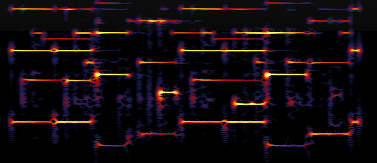
As you can see now we have the image of the guitar riff. If you place your mouse to those lines of spectrum it will say what note that is.

Now you probably see that those lines already look like MIDI. They have different intensity and length. If you want your MIDI to be “perfect” you should follow exact same length and velocity. I wanted it simple, so I didn’t do that.

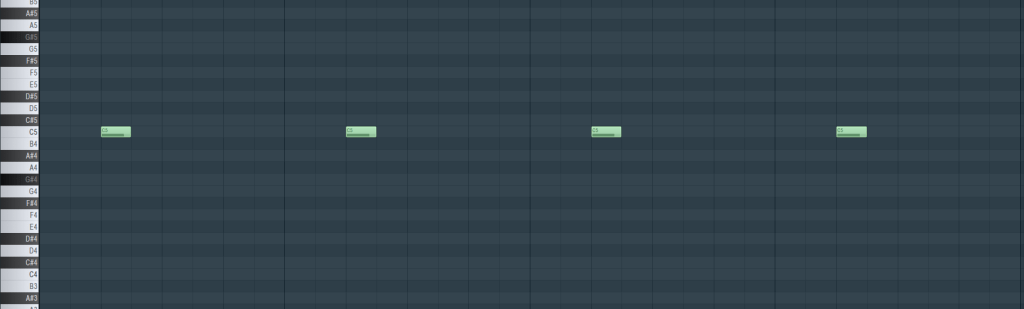
Now all you have to do is to place the notes one by one to your MIDI clip. You can also always compare your sound to the sample. After 10 minutes I got to my point.

Please note that musical instruments have a lot of different noises. So the most of actual notes will be around C3-C6 octaves.

Please note that Melodyne does exact same thing, it analyzes spectrum of the signal and automatically places the notes, but it’s always not perfect at all. You can do better job using this method.

What Makes a Trap Beat Sound Like a “Trap Beat”?

Every music producer wants to know the answer to this important question. You see, that in 2020 Rap/Hip-Hop game evolved into many different genres such as Trap, Club Rap, Pop Rap, Mumble Rap, Drill Music and, already classic, “SoundCloud Rap”. But what defines each of these genres?

Tempo

First of all Trap music is not fast at all. At the beginning of the Hip-Hop era tempos of the beats were from 85-110 BPM. Nowadays Trap beats are from 100-160, but drums are slowed down to 50-80 BPM. So basically we have our rappers such as 21 Savage or Gucci Mane rap slow.

Musical Composition

The game changed with digital era of music when software sequencers come out. Now people can make their music anywhere, even in their bedroom. Now when you have a software where you can create perfect melody and perfect drums, you actually don’t need those old vinyl recordings to sample anything. People like Lil Jon were making beats with only 2-3 musical components, Clap, HiHats, 808 Kicks. 6 tracks for songs that sells multiplatinum. Let’s make some piano melody that suppose to sound like Trap and analyze it.

Piano melody

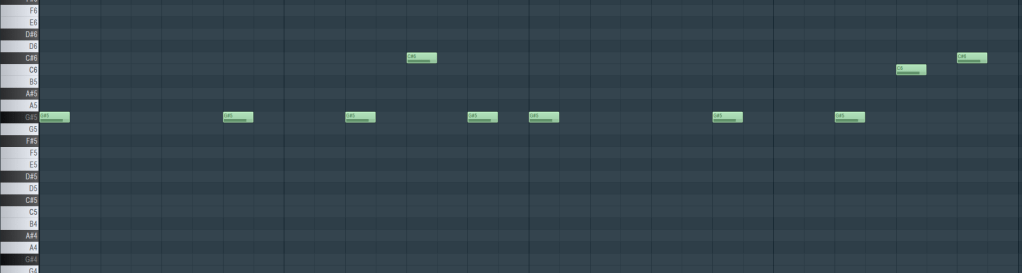
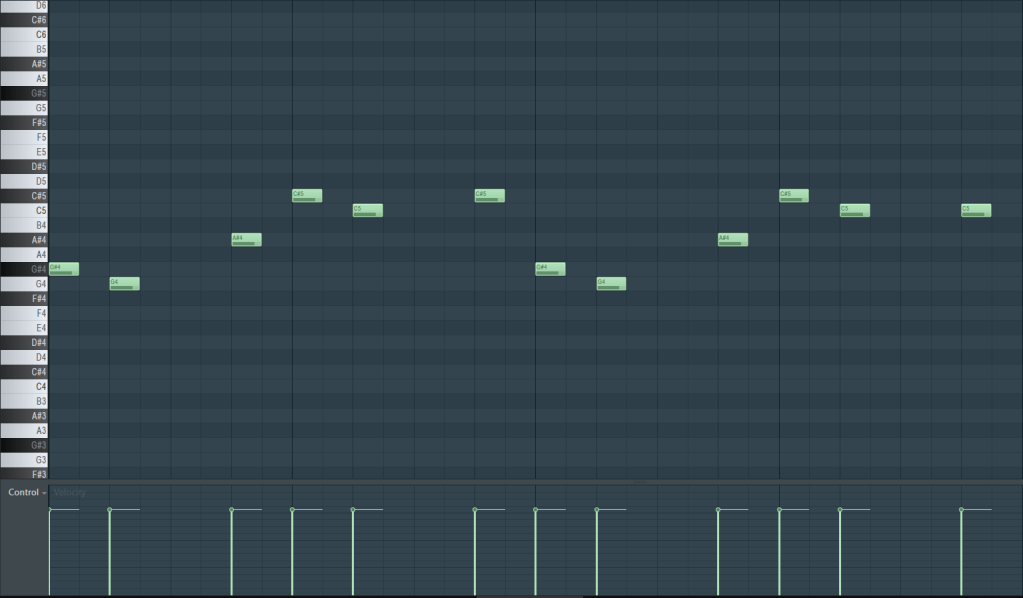
Scale is G# Minor, BPM (Tempo) is 130. As you can see it’s not that much to it. First of all you might noticed that the whole melody is played with only 5 notes. These notes are G, G#, A#, C,C#. As you can see we play around “Half-step relationships” which means going up 1 semitone or going down 1 semitone. In our melody we have 2 Half-step relationships: G-G# and C-C#. Also you can notice that melody kinda played around our 7th Chord in G# Minor scale. That 7th Chord is G diminished and musicians describe sound of that chord as “evolving into something”. Most of the time the 1st bar of a Trap melody sounds like a question and the 2nd bar sounds like an answer to that question. Let’s finish our beat.

808 Pattern

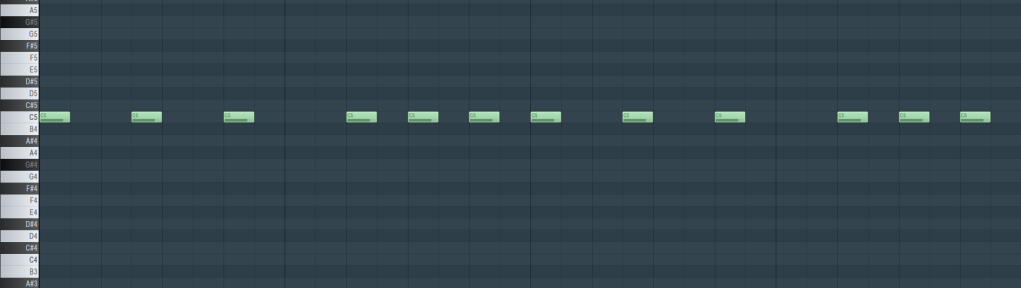
“808” is the MOST important part of your Trap beat. My 808 pattern just follows the same notes as the melody. 808 should be simple and strong, sometimes adding a compressor plugin makes your 808 sound better because tail of it becomes louder and more straight.

Kick pattern

Sometimes you want that punch in your track, sometimes you not. Kick just follows 808 pattern.

Snare pattern

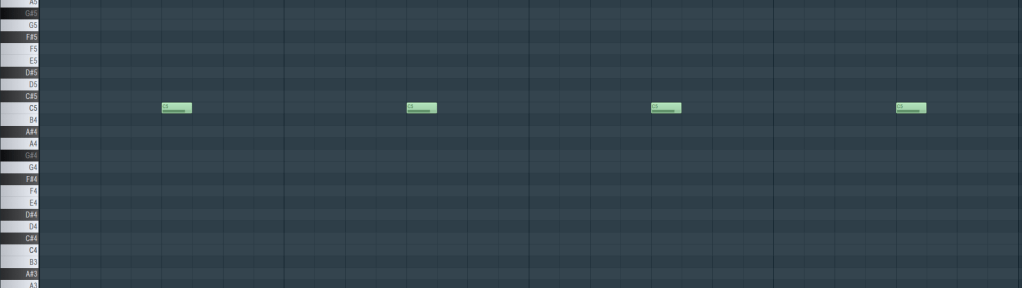
Simple snare pattern on every 3rd beat. Sometimes Clap is used also, but snares sound more mean.

Hihat pattern

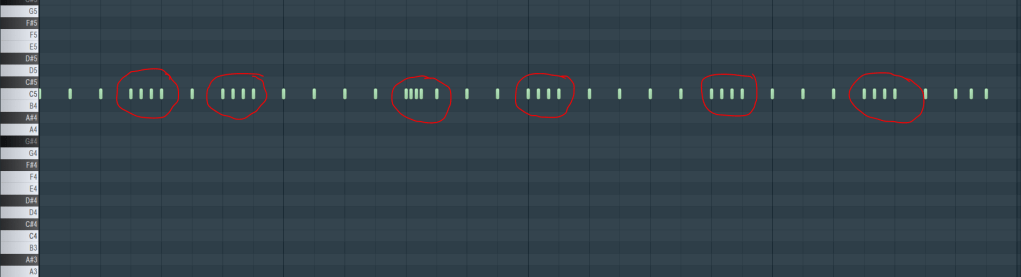
Hihats dictate pace of your beat, sometimes you want gaps, sometimes you want rolls. In this example I wanted as much energy as it can be.

Open hat pattern

Final touch is the Open hat pattern. Simple hits on 2nd beat. Adds movement to your beat.

Final result

Sounds simple, but there’s many songs on SoundCloud and Spotify that have 300k+ streams and use beats like this one.